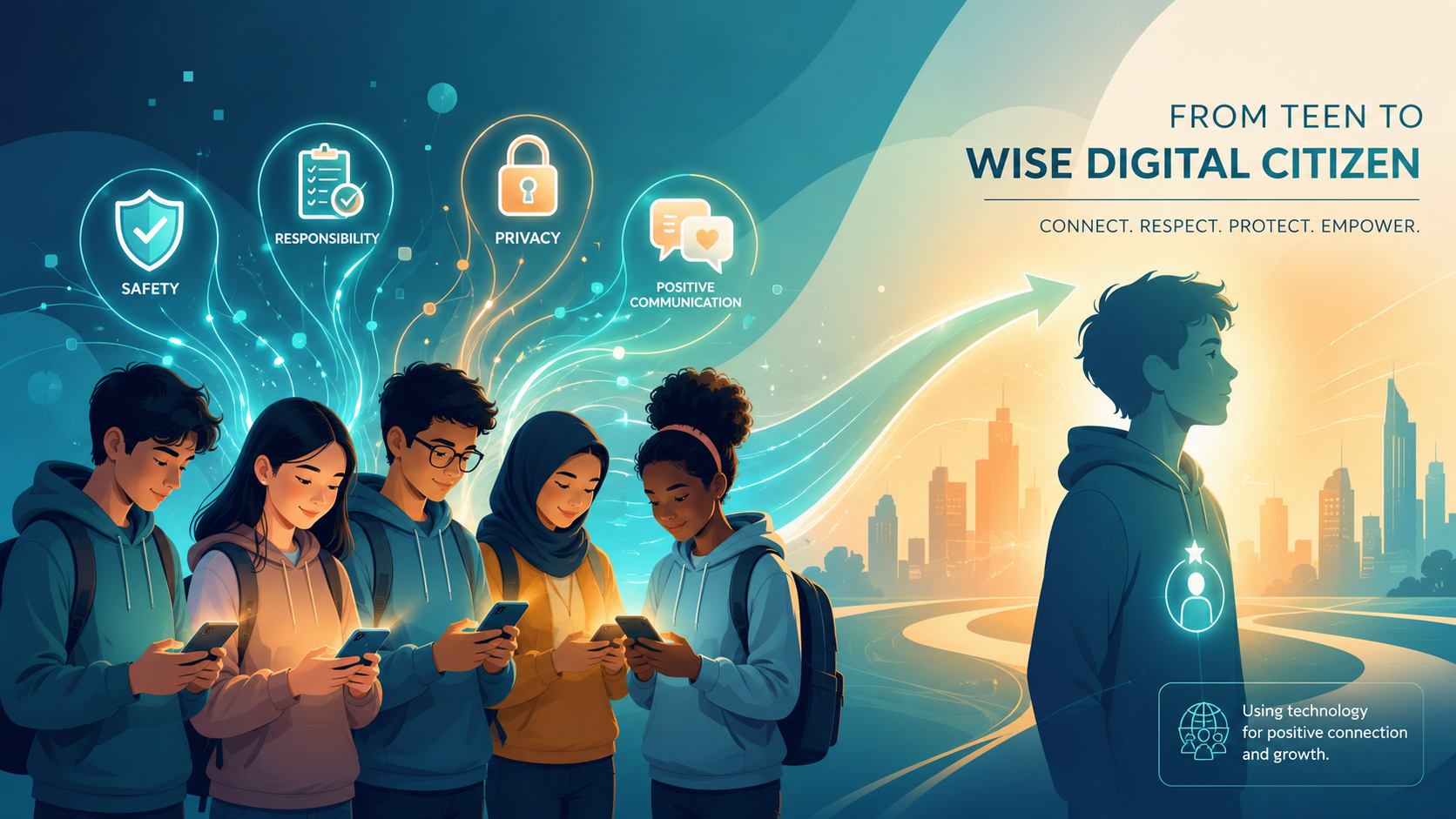
In the current era of digitalization, technology has become an inseparable part of human life, transforming commerce, education, entertainment, and social interaction. While these advancements offer unprecedented conveniences, they also present profound social challenges, particularly regarding the breach of digital ethics.
Adolescents, as members of Gen Z and Gen Alpha, are the primary actors in this digital landscape. They are characterized by their inherent tech-savviness, expressive nature, and a tendency to experience the "fear of missing out" (FOMO). However, because adolescence represents the foundational phase of identity formation, their exposure to an unfiltered influx of digital data makes them highly vulnerable to online threats. Without a solid ethical foundation, the digital space risks devolving into a hostile ecosystem dominated by misinformation and behavioral issues, highlighting the urgent need for comprehensive digital literacy.
The Harsh Realities of the Digital Space
The absence of robust digital ethics has led to a significant rise in digital misconduct and cybercrimes:
- The Proliferation of Hoaxes: Misinformation has reached alarming levels. Data from the State Intelligence Agency (BIN) indicates that 60% of content circulating on social media consists of hoaxes. This unregulated flow of disinformation and malinformation can lead to real-world harm, such as the public resistance to COVID-19 vaccines during the pandemic.
- Cyberbullying epidemic: Cyberbullying remains a critical threat to the mental well-being of young users, potentially causing severe anxiety, trauma, and depression. According to UNICEF, 45% of Indonesian youth aged 14 to 24 have experienced online bullying, with 45% of harassment occurring through chat applications and 41% involving the non-consensual sharing of personal media.
- Negative and Radical Content: The spread of content containing violence, pornography, and sectarian (SARA) intolerance threatens social cohesion. In 2024, the National Counterterrorism Agency (BNPT) identified at least 2,264 social media accounts spreading 10,519 instances of radical, anti-state, and intolerant content.
- Privacy Violations: Recording and sharing images or videos of others without consent has become a common yet illegal practice to gain online traction. Under Indonesia's Electronic Information and Transactions Law (UU ITE), unauthorized sharing of personal information (such as Article 32) can result in up to 10 years of imprisonment and a fine of 5 billion IDR.
To mitigate these risks, a collaborative effort involving policymakers, schools, and families is required to establish a safe virtual environment:
1. Government Regulations and the "KUPAS" Program
The Indonesian government, through the Ministry of Communication and Digital (Kemkomdigi), has actively initiated programs like KUPAS (Kumpul Tunas Smart Digital Future Ready) to educate middle school students on digital preparedness. Additionally, policy measures have been enacted, such as Government Regulation No. 17 of 2025 (PP Tunas), which restricts social media usage for children under 16 as a preventive step to protect minors in the electronic space.
2. The Power of "PAUSE"
In daily practice, educators and parents can instill the PAUSE framework to encourage mindfulness before posting online:
- P – Think (Pikirkan) the consequences and impact of your digital post.
- A – Observe (Amati) and verify the credibility of the information source to avoid hoaxes.
- U – Prioritize (Utamakan) and protect your own and others' personal privacy.
- S – Respect (Sikapi) others with polite communication and empathy.
- E – Evaluate (Evaluasi) the type of digital footprint you wish to leave behind.
3. Institutional Synergy
While schools must integrate digital ethics directly into their curricula, families remain the primary moral compass for guiding children's screen time and behavioral development in the virtual community.
Conclusion
Building a wise digital generation requires more than just teaching technical skills; it demands the cultivation of moral responsibility and critical thinking. By understanding that every digital action leaves a permanent digital footprint, young users can learn to utilize the internet constructively—not to spread hate or misinformation, but to showcase creativity, positive achievements, and collaborative values. Through joint regulation, institutional support, and individual mindfulness, the digital space can be transformed into a secure harbor for future innovation.
SEL - TDD
forum Discussion
No discussions yet. Be the first!