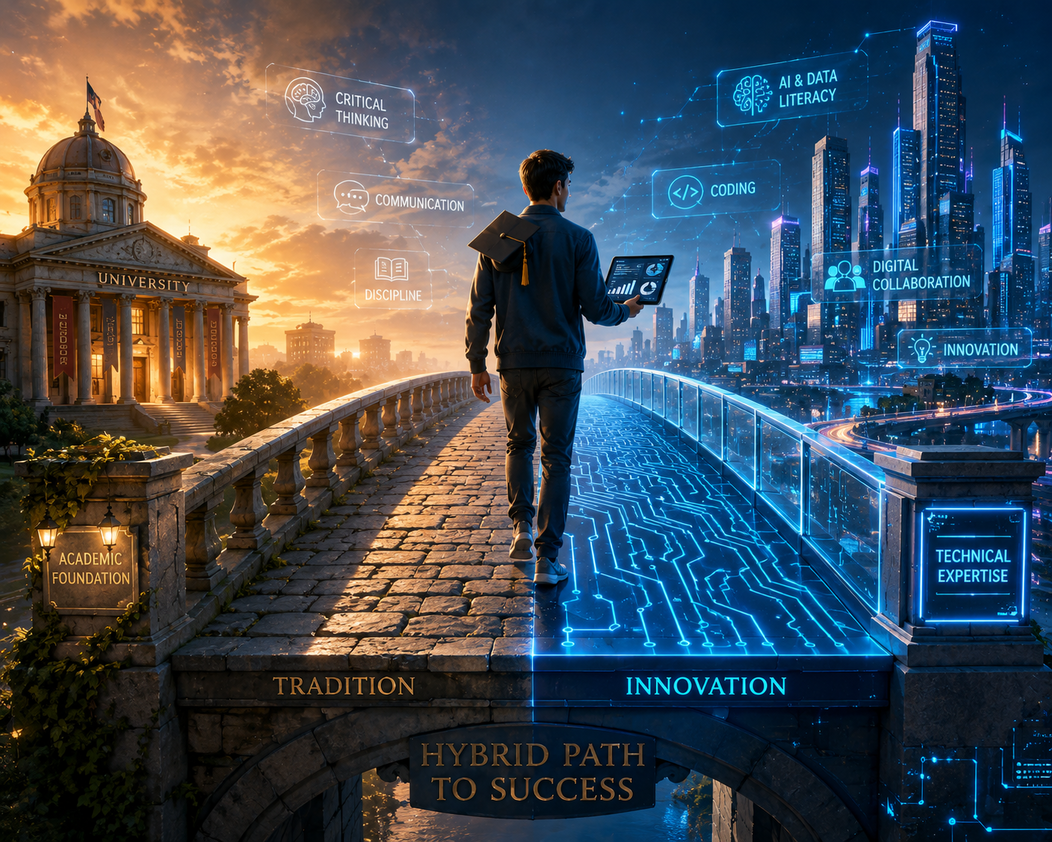
In the traditional landscape of professional development, a university degree was long regarded as the "golden ticket" to social mobility and career stability. However, as the world enters the Fourth Industrial Revolution, this paradigm is undergoing a fundamental transformation. Educators and policymakers are now confronted with a "credential conundrum" where the rapid evolution of industry requirements frequently outpaces the agility of academic curricula.
The Erosion of the Degree as a Market Signal
Historically, an academic degree served as a credible "currency" for skill. It signaled not only a baseline of knowledge but also a candidate's discipline, commitment, and ability to navigate complex systems. Recent data, however, suggests a significant devaluation of this currency. For instance, in 1980, the prestige of an engineering degree in India was a near-guarantee of employability; today, surveys indicate that only 42.6% of graduates are considered employable.
This shift is further evidenced by changing recruitment filters. According to data from the National Association of Colleges and Employers (NACE), the percentage of employers using GPA as a screening tool plummeted from 75% in 2019 to less than 50% in 2023. Employers are increasingly recognizing that "better degrees don't automatically translate into better skills".
The Ascendance of Skills-Based Hiring
Global tech leaders such as Google, IBM, and Tesla are spearheading a movement toward "skills-based hiring," prioritizing demonstrable capabilities over institutional pedigree. The empirical results of this shift are profound: organizations that embrace skills-based hiring are 107% more likely to place talent effectively, and 94% of hiring managers report that these hires outperform those selected solely based on their degrees.
This trend is particularly prevalent in sectors like UX/UI design and data science, where certification and real-world project portfolios often hold more weight than a four-year degree. Even in more traditional markets like Indonesia, research shows a significant statistical preference (p < 0.01) for practical skills in recruitment and compensation determination, although degrees are still valued as an initial foundation.
The Power of Human-Centric Skills
While technical proficiency is essential, the most critical differentiator in the modern workplace is the mastery of "soft skills"—increasingly referred to as "power skills". LinkedIn reports that 89% of "bad hires" are attributed to a lack of soft skills, such as emotional intelligence, communication, and adaptability, rather than technical incompetence. By 2030, it is predicted that two-thirds of all occupations will rely heavily on these human-centric skills. This shift underscores the reality that while a degree may "get your foot in the door," it is your interpersonal and problem-solving abilities that "keep you in the room".
A Sectoral Perspective: Where the Degree Remains Supreme
Despite the rising importance of skills, the academic degree has not lost its relevance across the board. In regulated professions such as medicine, law, and dentistry, the degree remains the "supreme" and non-negotiable prerequisite for practice. Furthermore, for large, hierarchical organizations, a degree continues to serve as an essential "hygiene factor" for initial screening and internal promotions.
Conclusion: The Hybrid Model for the Modern Student
Based on the current global landscape and the data provided by these sources, the most effective strategy for students today is not to choose between a degree and skills, but to adopt a hybrid model of professional development.
Final Assessment:
- The Degree as Foundation: The university provides the theoretical framework, critical thinking abilities, and social networks necessary for long-term growth.
- Skills as the Engine: Continuous upskilling through micro-credentials, bootcamps, and hands-on experience ensures that a professional remains relevant as technologies like AI disrupt the market.
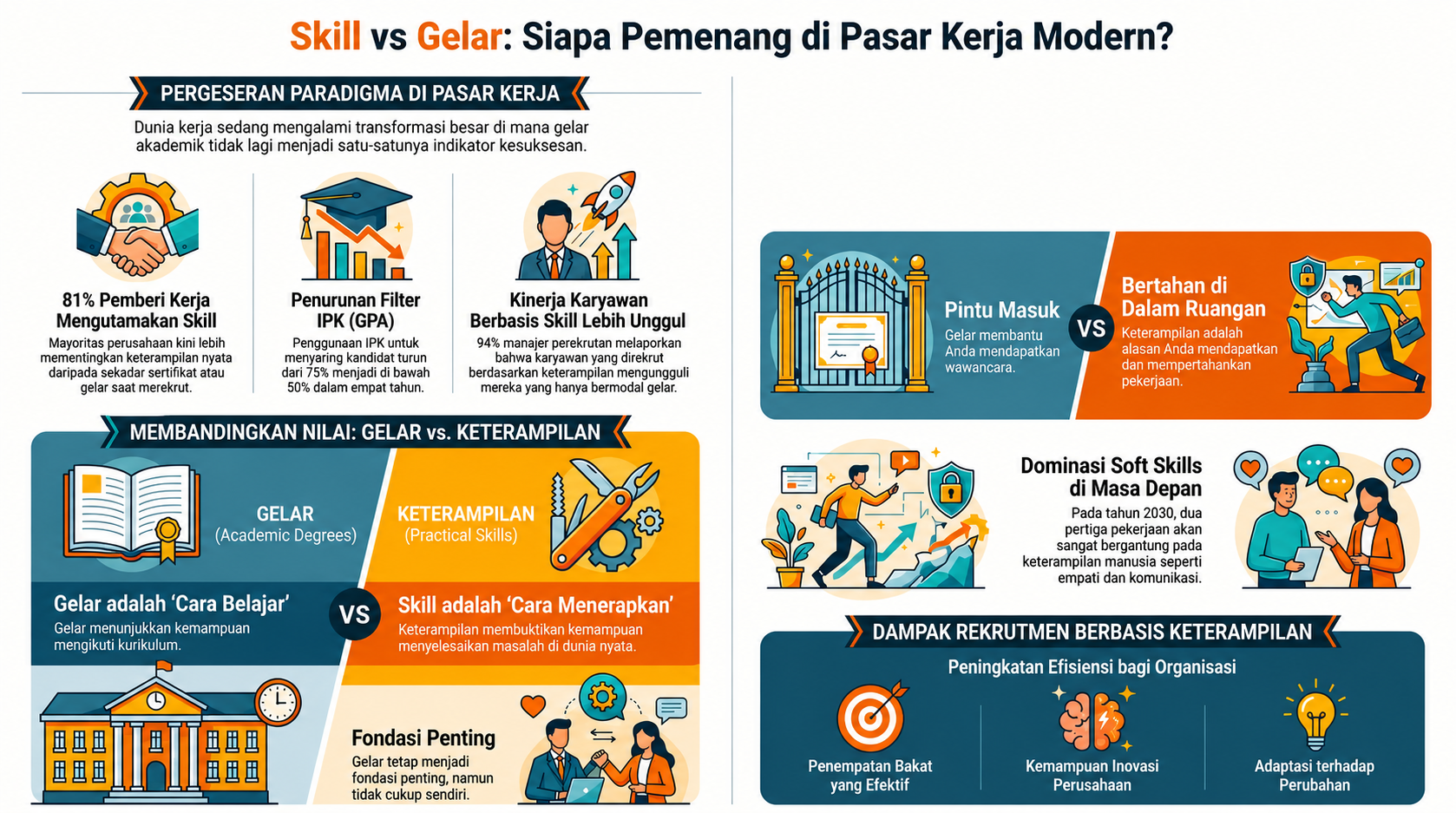
Ultimately, the evidence suggests that a degree without skills is empty, and skills without a degree may face unnecessary glass ceilings in traditional sectors. For the current generation of students, the "degree vs. skill" debate should be reframed as a "degree plus skill" imperative.
As educators, we must ask ourselves: Are we preparing our students to be mere credential-holders, or are we equipping them to be lifelong learners who can translate knowledge into impact? We invite you to reflect on your own institutional practices and decide which side of this evolution you will champion.
forum Discussion
No discussions yet. Be the first!